· Diogo Silva · 7 min read
What remains when the world turns
An autumn reflection on family, identity, and the things we hope to keep through a changing life.
In one of these pictures, we stand beneath a tree. In another, the world has obligingly arranged itself into cubes. Elsewhere we have acquired elven ears, pirate coats, or the troublesome business of being Jedi. The scenery has been extravagant. The same seven people appear in every picture.
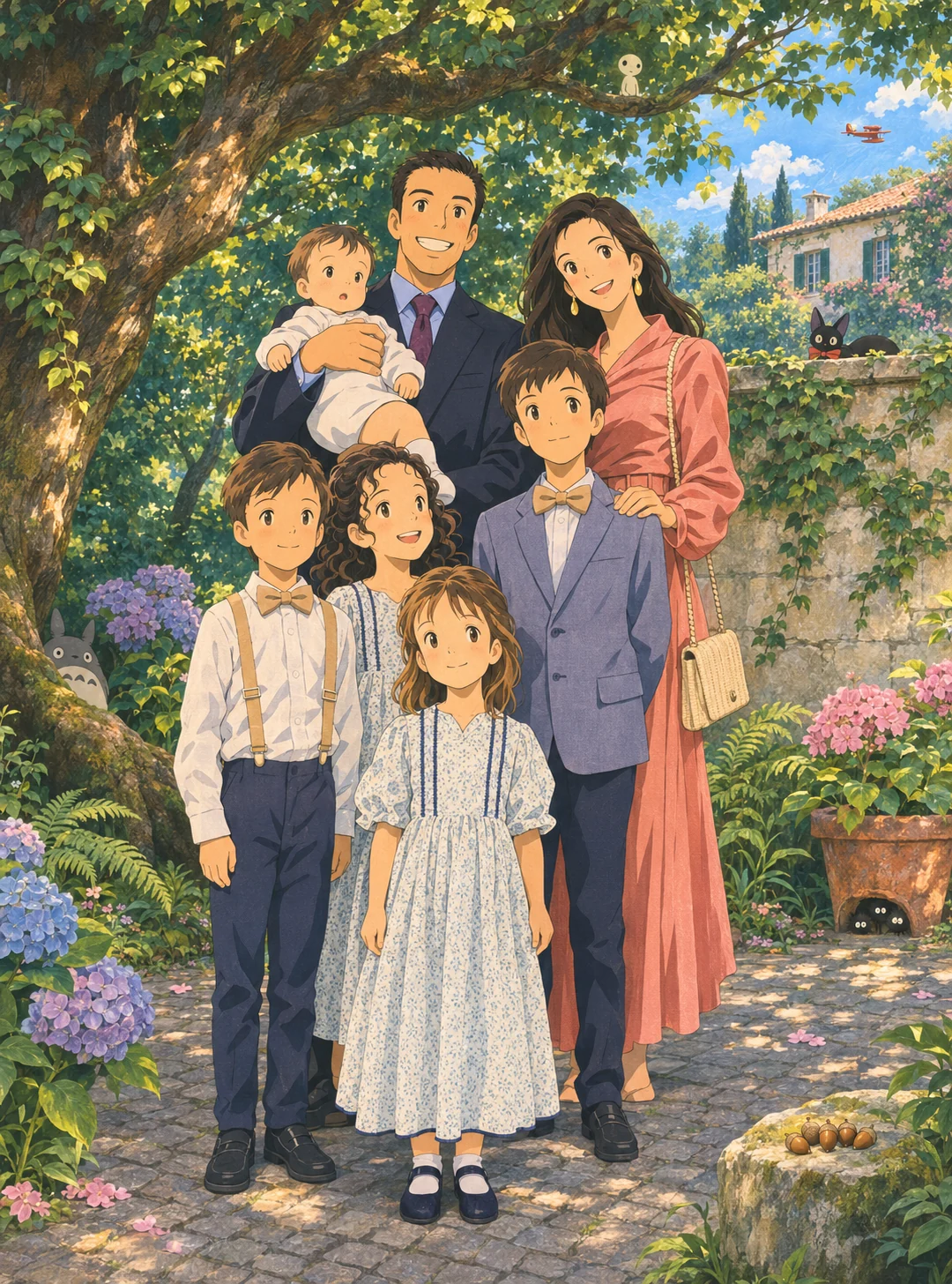
1 / 5 · Garden 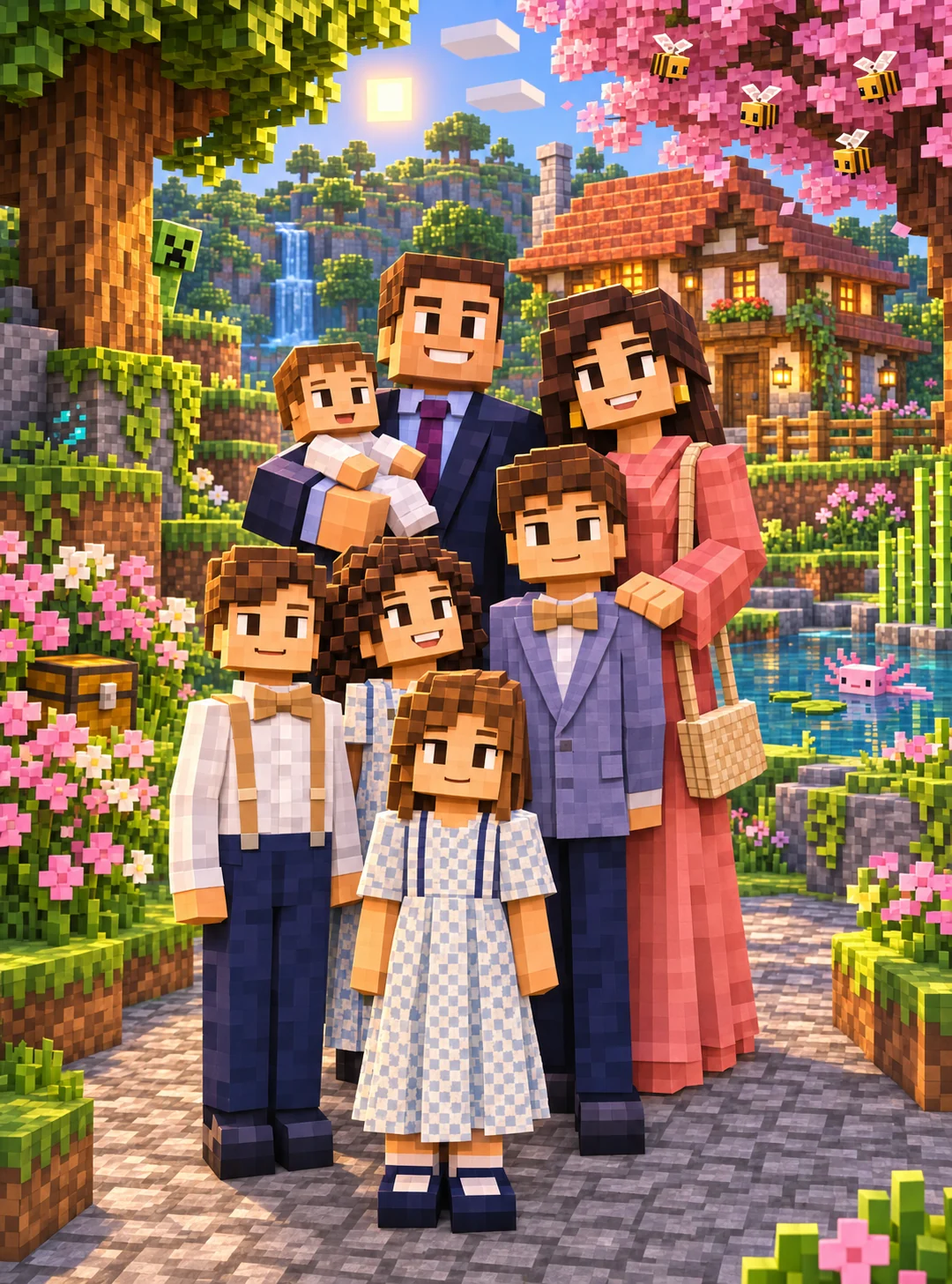
2 / 5 · Minecraft 
3 / 5 · Silvermoon 
4 / 5 · Harbour at sunset 
5 / 5 · Naboo
The same family, in five worlds. Browse the portraits, or open one for a closer look.
I find I could be persuaded to inhabit almost any of these worlds. I am rather less willing to negotiate the company.
There is something of autumn in the thought. A familiar place can alter almost beyond recognition when the light turns and the leaves begin to fall. The path is still there, though it looks older in the afternoon. You may have walked it for years before noticing what has been beside you all along.
These pictures leave me wondering how much of what I call myself depends on the scenery.
While life is agreeable, the question can wait. It becomes harder to put aside when work changes, money grows scarce, a project fails, or a carefully imagined future closes without much ceremony. We discover how many things we had mistaken for permanent arrangements.
Success can confuse the matter just as thoroughly, and with considerably better manners. A new title arrives. More doors open. Our time acquires a price that other people are willing to pay. It is possible to become so accustomed to being introduced by what we do that we scarcely notice when the occupation begins answering for the person.
The old distinction between substance and accidents is useful here. In the language of classical philosophy, a person can acquire knowledge, grow older, and pass through very different conditions while remaining the same person. Much can change without someone else taking our place.
“Accidental” does not mean unimportant. Money keeps a roof sound and food on the table. Work can sustain a household or exhaust the people within it. Metaphysics will not pay the electricity bill. These things have real weight, and they ask for practical judgement. They do not, however, exhaust what a person is.
My dignity does not rise with my salary. It survives a failed undertaking. Beneath the altered circumstances, there is still someone who must decide how to live.
My faith asks for particular care with the word substance. There is a singular conversion for which the Church reserves the name transubstantiation. In the Eucharist, through consecration, the whole substance of the bread is converted into the substance of Our Lord’s Body, and the whole substance of the wine into the substance of His Blood. The appearances of bread and wine remain. What is present has changed at the level of substance, beyond what the senses can tell us.
In the ordinary changes of a human life, we can recognise a different pattern. The outward conditions may be transformed while the person endures. We change our clothes, our work, perhaps even the country in which we live. We remain the ones who have made those journeys, answerable for what we carry into the next place.
That continuity leaves us with a moral question. What sort of person shall I become as I go?
To remain myself can hardly mean granting all my old faults permanent lodgings. There are opinions worth revising and habits worth leaving behind. We may need to learn patience, make amends, or relinquish an ambition that has ceased to deserve our loyalty. The person remains through these changes; character is formed by the way we meet them. There is room for repentance within a faithful life.
For me, family has much to do with keeping that distinction clear.
There are people who know us without requiring a professional introduction. They share a history that will never fit neatly into a biography. Their lives are joined to ours through promises, daily duties, and a great many ordinary hours. The relationship is there before the good news arrives, and it is still there when we have less pleasing news to bring.
At home, the scale of things is wonderfully exacting. A title will not put a tired child to bed. An impressive opinion is of limited use when what is needed is patience. People who live with us have ample opportunity to discover whether our principles survive a long day.
I find something reassuring in that. It gives conviction a task to perform. If I value presence, some of my hours must be available to others. If I value responsibility, there are promises to keep when nobody is taking account of them. If I hope to teach kindness, my own manner of speaking belongs in the lesson.
Identity becomes visible in such small things. In a conversation given our full attention, a task taken up without being asked, an apology made without a defence attached. Here, the person I believe myself to be encounters the person others actually have to live with.
This reaches into working life. Before accepting an opportunity, I want to understand what it might allow me to build and what it will require of those who share my days. Which hours will it ask for? For how long? What existing promise will have to make room for the new one?
The answers will vary. A demanding season of work may be an act of care for a family. Another opportunity may have to be declined for much the same reason. Some sacrifices are worthwhile precisely because they are temporary. They deserve an honest reckoning when the temporary arrangement begins to look suspiciously like the rest of our lives.
I want to do good work. There are things I hope to learn and projects I would like to see finished. Having a family gives those ambitions a place in a larger life. It helps me judge an opportunity by what follows after the excitement of accepting it: the days we shall actually have to live.
Family itself belongs to time. Children grow, needs change, and familiar voices acquire thoughts of their own. Those we love will keep becoming more fully themselves, sometimes in ways we had not expected. To care for them is to attend to who they are now, rather than asking them to remain as we first learnt to know them.
Autumn has something to say about that, too. Its beauty comes with a sense of passing. Affection asks us to look more closely while there is light, and to take care with what has been entrusted to us. A shared life continues through the attention we give it.
The difficulties will still require their answers. Bills must be paid, mistakes repaired, and uncertain paths explored. With these people beside me, I have a better chance of remembering who is walking the path, and why it matters to keep going.
Looking again at the pictures, I see the same seven faces under several improbable skies. None of those worlds is quite ours. There will be days ahead that are stranger to me than any of them.
I hope to have the sense to change what needs changing, and the humility to accept what I cannot arrange. Through it all, I want those closest to me to recognise something familiar in the way I love them.
The light may fall differently by then. I should like them to know me when I come home.